

Case Study
Madison County Sheriff's Office, IL
How a digitized case file, a chat-based investigative assistant, and three decades of persistence came together to identify a killer and give a family answers.
Cracking a 33-Year Cold Case with Centerline AI®
About Madison County, IL

Madison County, Illinois sits just across the Mississippi River from St. Louis, anchored by communities like Granite City and Edwardsville. Like sheriff’s offices everywhere, Madison County’s investigations division carries an active caseload alongside a shelf of cases that never closed.
One of those cases had been open since November 9, 1993, when the body of Randy Gail Sperino, 34, was found bludgeoned to death in a rural field outside Granite City. For more than three decades, investigators re-interviewed witnesses and repeatedly submitted DNA evidence to CODIS, the national criminal DNA database. No match ever came back, since the suspect had no prior conviction on file to compare it to.
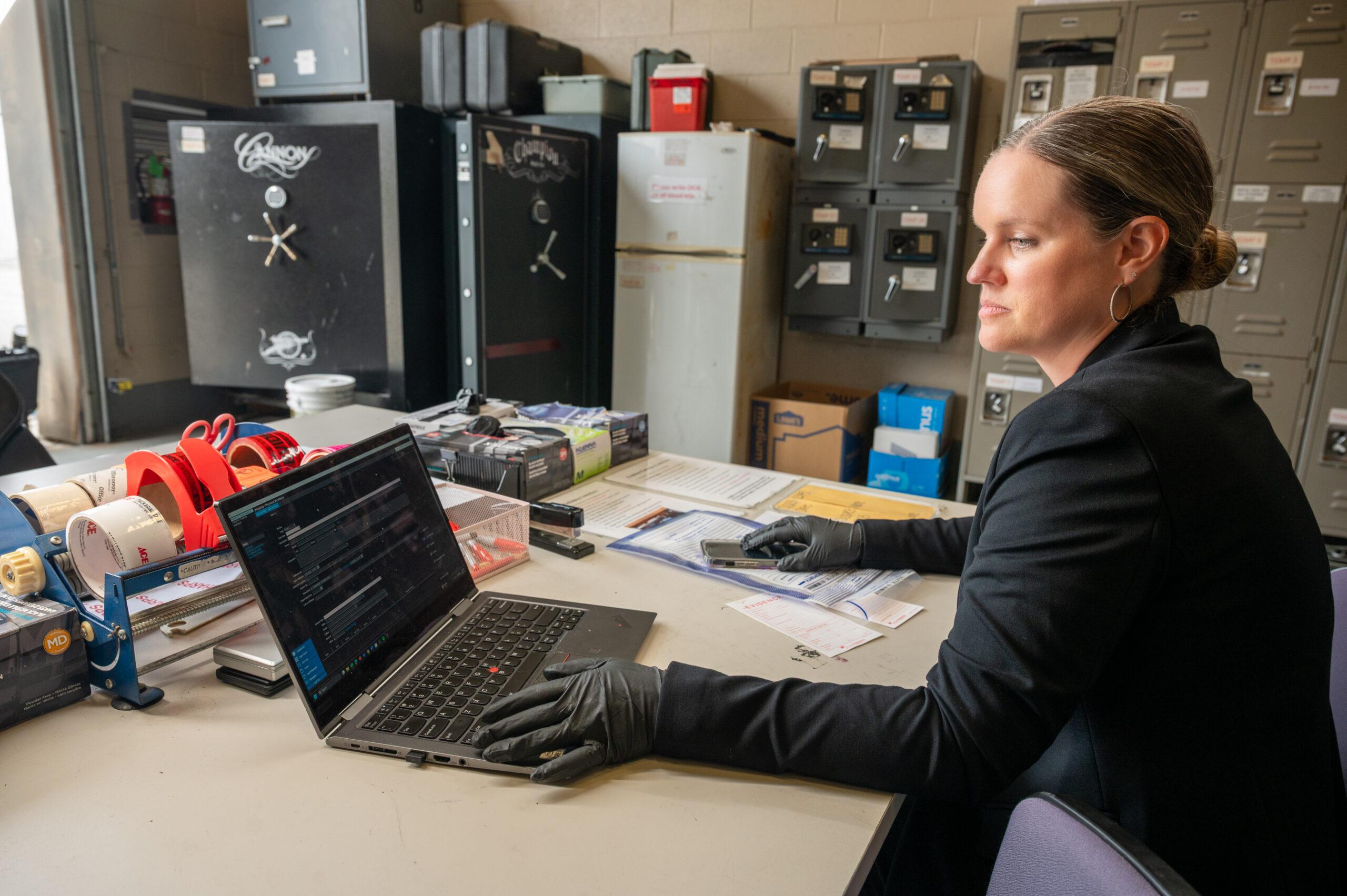
The case followed Madison County through detective transfers, storage moves, and format changes, growing into one of the office’s most difficult cold cases: over 2,000 pages of typewritten reports and handwritten notes, plus more than 300 pieces of physical evidence. Then, about a year and a half before the case broke, Captain Tim Lawrence, who now oversees the investigations division, decided it was time to take another look.
“Every detective has their own personal analyst. It does not replace an investigator. It’s only as accurate as the information you give it.”
Detective Jake Svoboda
Madison County Sheriff’s Office, IL

2,000+ Pages
Digitized and made searchable inside Centerline AI

~2 Weeks
To scan the entire case file into a digital record

33 Years
Between the murder and a confirmed identification
The Problem
A 1993 case file is a different kind of challenge than a modern one. Madison County’s detectives were still writing reports on typewriters as late as 2008, and the Sperino file reflected it: boxes of coffee-stained, hand-annotated pages, reorganized by whichever detective had picked it up last.
That volume created real barriers to progress:
- Which of 2,000+ pages of notes contained a viable, unexplored lead?
- How do you rebuild a clean, reliable timeline from three decades of layered, sometimes contradictory documentation?
- How does a new detective get up to speed on a case that predates their career, without weeks of reading before they can be useful?
- How do you justify reopening a cold case when your division is already assigned new cases every day?
As Captain Lawrence put it, the case had never gone unworked for lack of effort; earlier investigators simply didn’t have the forensic science or the tools yet to connect what they had.
The Solution
“Timelines were huge for us. During the initial investigation, the investigators did an incredible job. Being able to recreate the timeline they’d built, without sitting down and writing it out word for word, instead generating a quick document. I can hand-off to any new detective with a general understanding of the case before we walk into a suspect interview. Handing that to your second chair, with a solid understanding of why the timeline matters, was huge for us.”
— Detective Jake Svoboda, Madison County Sheriff’s Office
Detective Jake Svoboda had already spent about two years working with Centerline AI’s co-creator, Lane Floyd, using an early version of the platform, then called Blue Line AI, to help reactivate other cold cases, including a 1990 unidentified-remains case and a 1994 homicide. That track record gave Captain Lawrence the confidence to greenlight a deeper look at the Sperino case.
The work started with digitization. Madison County’s records staff spent roughly two weeks scanning the entire case file, including every report, sticky note, and item of evidence, into a searchable digital record. Once digitized, the full case file was loaded into Centerline AI as a single case.
From there, investigators used Centerline AI much like they’d use a fellow detective:
- Chat-based case review: asking natural-language questions about the file instead of manually re-reading thousands of pages.
- Timeline reconstruction: generating a clean, seven-page summary of the case timeline that could bring a new detective up to speed before a suspect interview, instead of requiring them to read the full file first.
- Cross-referencing: checking new interviews against existing names, dates, and leads as they came in.
The forensic breakthrough came from a parallel track: advances in DNA technology and forensic genetic genealogy, combined with an offline records search of Secretary of State data across a five-year window, which placed a person of interest, Albert “Buddy” Ziegler, near the victim. Investigators confronted Ziegler with what they had, and he confessed.
The Results
“The tool’s great, we’ve said that over and over, but it’s only as good as the investigators. If we didn’t have great investigators here who kept it going and had the motivation to see it through to the end, we wouldn’t be here.”
— Captain Tim Lawrence, Madison County Sheriff’s Office
Albert “Buddy” Ziegler was charged on May 26, 2026, with two counts of first-degree murder in the death of Randy Gail Sperino; the case is still moving through the criminal justice process.
As with any pending criminal matter, the suspect is presumed innocent until proven guilty.
For Madison County’s investigators, the resolution was as personal as it was procedural. It closed a case that had outlasted the careers of the detectives who first worked it, and it gave the victim’s family the answer they’d waited three decades for.
The impact has extended well beyond the Sperino case:
- Madison County’s State’s Attorney’s Office purchased its own Centerline license, allowing prosecutors to generate their own case synopses and trial-prep materials without discovery complications.
- Captain Lawrence has begun reassigning other unsolved cases, ranging from 20 to 60 years old, to detectives, confident that Centerline AI will keep the review manageable alongside their regular caseload.

This website uses cookies to ensure you get the best experience on our website. By continuing on our website, you expressly consent to our use of cookies, Privacy Policy and Terms of Use. To find out more about how we use cookies, please see our Privacy Policy.